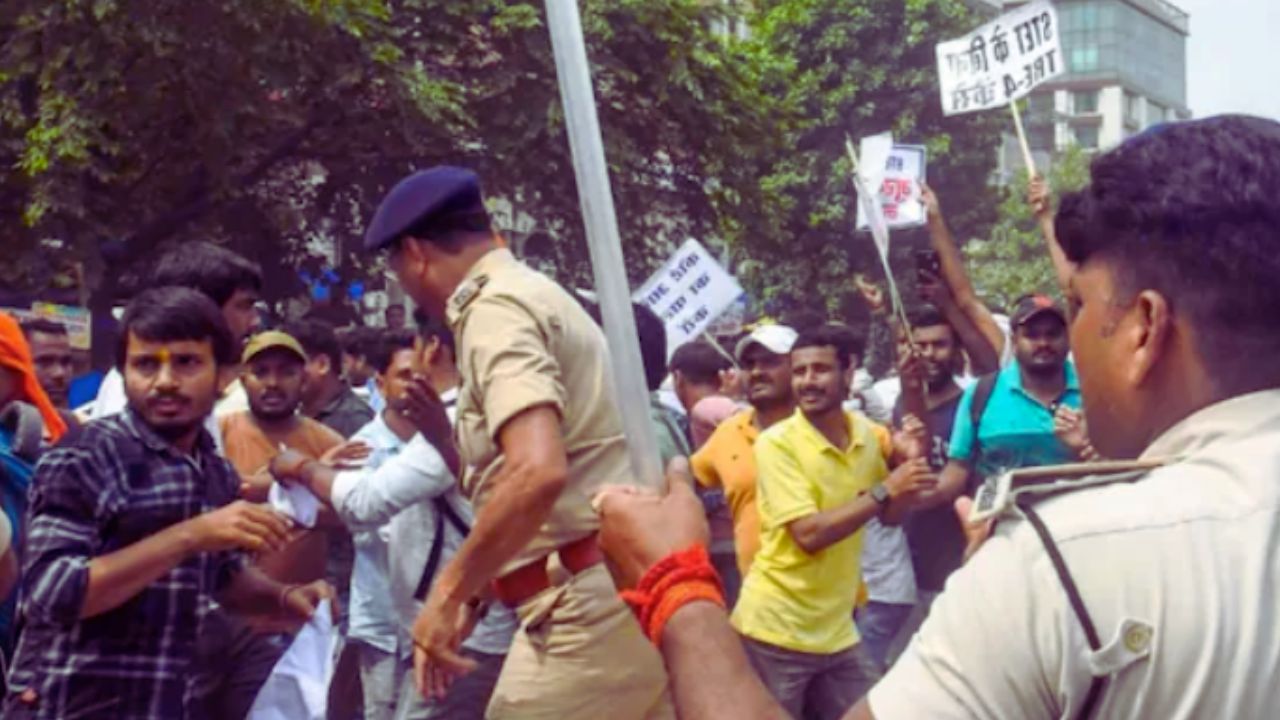
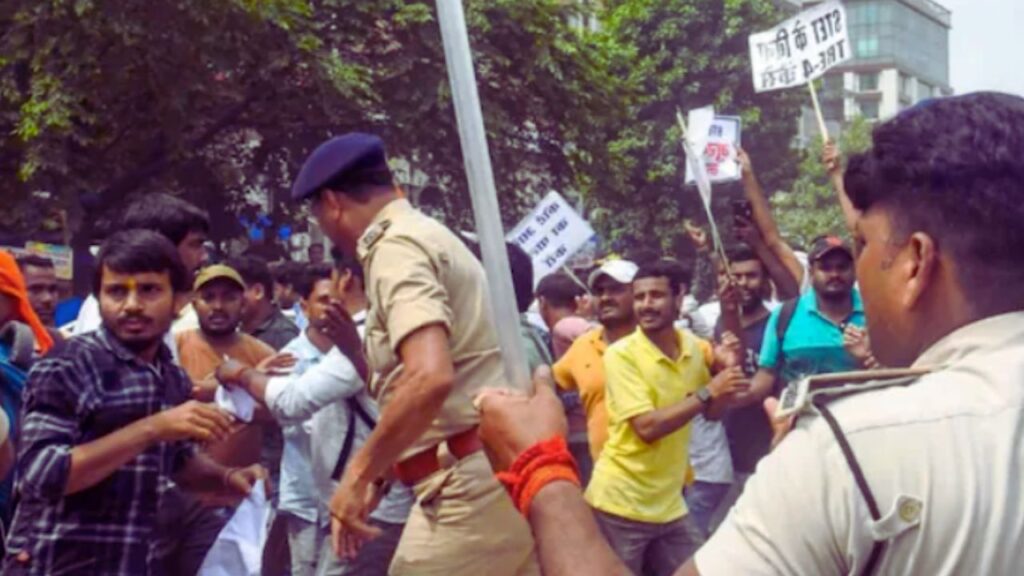
In a dramatic and deeply symbolic protest that shook the streets of Patna, thousands of Bihar’s aspiring teachers raised their voices with a powerful slogan: “No STET, No Vote.” Their demand? The immediate conduct of the Secondary Teacher Eligibility Test (STET) — a critical examination for securing government teaching jobs. What started as a peaceful rally turned chaotic when police forces resorted to lathicharge to disperse the demonstrators, leading to injuries, outrage, and renewed debate over the treatment of job-seeking youth in the state.
The Core Demand: Conduct the STET Without Delay
For months, aspirants have been pressing the Bihar government to conduct the STET 2024, an exam that is essential for those seeking teaching positions in government secondary and higher secondary schools. Delays, administrative silence, and lack of clarity over the exam calendar have only added fuel to the fire. With unemployment running high and teacher vacancies piling up, the aspirants claim the delay is deliberate and discriminatory.
This frustration culminated in a large-scale protest in Patna, where candidates from across the state gathered near the Dak Bungalow Chauraha, demanding the immediate release of the STET notification and examination schedule.
A protestor, Ranjana Kumari from Samastipur, said:
“We have studied for years. We are qualified. Why is the government silent? If STET is not conducted, they will not get our vote — that’s our clear message.”
The Protest Turns Violent: Police Lathicharge Sparks Outrage
As the protest gained momentum, with hundreds occupying key roads and shouting slogans against the Nitish Kumar-led state government, police were deployed to control the situation. What followed was a violent lathicharge on unarmed, peaceful demonstrators, many of whom were women.
Eyewitness videos and social media footage showed protestors being dragged, beaten, and dispersed with brute force. Several candidates sustained injuries, and many were detained.
The police, in their defense, stated that the protest had become “unlawful” and was obstructing traffic and public order. However, activists and civil society organizations have condemned the use of force, calling it an assault on democratic expression.
Human rights lawyer Ravi Bhushan tweeted:
“This is not law enforcement. This is state-sponsored violence against unemployed youth who are simply asking for their right to employment. Lathicharge won’t break their spirit — it’ll only strengthen their cause.”
Political Fallout: Opposition Targets the Government
The lathicharge has created ripples across the political spectrum. Opposition leaders have seized the moment to corner the ruling alliance, accusing it of neglecting Bihar’s unemployed youth and responding to peaceful protests with repression.
RJD leader Tejashwi Yadav slammed the government, saying:
“This government cannot handle jobs or justice. Instead of solving the problem, they’re beating students on the streets. STET is not a favor — it’s a right.”
Even members within the BJP — part of the ruling NDA coalition in Bihar — expressed concern over the government’s failure to engage with the protestors. Some leaders have called for a high-level inquiry into the police action and urged the Chief Minister to take immediate steps to resolve the crisis.
Aspirants Speak: Dreams Crushed, Resolve Strengthened
For Bihar’s STET aspirants, this protest was not just about a missed exam — it was about dignity, accountability, and the future. Most of them are postgraduates, B.Ed. degree holders, and trained professionals who have spent years preparing for government teaching roles. The delay in STET has left them in limbo, financially strained, and emotionally exhausted.
Despite the police crackdown, their slogan — “No STET, No Vote” — has gained traction across Bihar’s youth circles, trending on social media and drawing support from student unions, teachers’ associations, and digital activists.
In an emotional statement, protestor Satyam Anand said:
“They hit us, but we’re not backing down. This is our future. If they don’t give us STET, we will not give them our vote in 2025. Let them be ready.”
The Bigger Picture: Unemployment and Education Crisis in Bihar
This incident reflects a deeper crisis facing Bihar — the intersection of rising unemployment, delayed recruitment exams, and a crumbling public education system. Despite a large number of teacher vacancies in the state, recruitment processes remain delayed, mired in red tape, and plagued by irregularities.
According to recent data, over 1.5 lakh teaching posts in Bihar remain vacant, even as government schools face acute shortages. Delays in eligibility exams like STET only worsen the crisis, hurting both teachers and students.
Analysts believe that ignoring the voices of these aspirants could have significant electoral consequences for the ruling government, especially with the 2025 Assembly Elections drawing closer.
Conclusion: A Call for Justice, Not Just Jobs
The events in Patna are more than just a law-and-order episode — they represent a generational cry for justice and opportunity. Bihar’s teacher aspirants have made their message loud and clear: conduct the STET, or face the electoral consequences. The baton may have dispersed the crowd, but the echoes of “No STET, No Vote” are now louder than ever — reverberating across campuses, social media, and the political corridors of Bihar.
Whether the state government responds with empathy or arrogance will determine not just the fate of these aspirants, but also the trust of a generation seeking change through books, not bricks.